
Federal Conspiracy Lawyer
Federal Conspiracy Lawyer in NYC
A federal conspiracy charge accuses you of agreeing with at least one other person to commit a federal crime. Under 18 U.S.C. 371 and other conspiracy statutes, the agreement itself is the crime, so you can be convicted even if the underlying offense was never carried out. A NYC federal conspiracy lawyer attacks the government’s proof that you knowingly joined an agreement.
This page is part of our federal criminal defense practice. Konta, Georges & Buza, P.C. defends people charged with or investigated for federal conspiracy in the Southern and Eastern Districts of New York and beyond. Because conspiracy is so broad and so easy for prosecutors to charge, our NYC federal conspiracy lawyers focus on the one thing the government must prove, which is that you actually agreed to join a criminal plan.
Need legal assistance?
Call us at (212) 710-5166 24/7 to arrange to speak with a lawyer about your case, or contact us through the website today.
What Is a Federal Conspiracy Charge?
A federal conspiracy is an agreement between two or more people to commit a federal offense or to defraud the United States. Under 18 U.S.C. 371, the general conspiracy statute, the government must prove an agreement, your knowing participation, and, for that statute, an overt act taken to advance the plan.
Conspiracy is one of the most common charges in federal court because it lets prosecutors reach everyone connected to an alleged scheme, even people on the edges. It is often charged alongside the underlying offense, such as drug distribution, fraud, or money laundering, and sometimes on its own. The agreement does not have to be written or formal, and it can be inferred from conduct. Our federal conspiracy lawyers concentrate on whether the evidence really shows a shared criminal agreement or just association with others.
Can I Be Charged With Conspiracy Even If the Crime Was Never Committed?
Yes. This is what makes conspiracy so powerful for prosecutors. The crime is the agreement itself, not its completion, so you can be convicted of conspiracy even though the planned offense never happened and no one was harmed. The government does not have to prove the object crime succeeded.
Because the agreement is the offense, a plan that failed, was abandoned, or was intercepted by agents can still support a conspiracy conviction. Under the general statute, the government also needs at least one overt act in furtherance of the plan, though the act itself can be entirely legal and minor, such as a phone call or a meeting. Many drug and fraud conspiracy statutes do not even require an overt act. Our NYC federal conspiracy lawyers challenge whether a genuine agreement ever existed, since that is the heart of the charge.
What Must the Government Prove in a Conspiracy Case?
The government must prove that an agreement existed between two or more people to commit a federal crime, that you knew about the agreement, and that you intentionally joined it. Under 18 U.S.C. 371, it must also prove an overt act. Knowledge and intent are the elements most often missing.
It is not enough that a conspiracy existed. The government has to prove that you personally knew of it and chose to join, with the intent to help it succeed. Mere knowledge that others are doing something illegal, without agreeing to participate, is not enough. Some conspiracy statutes, such as the drug conspiracy law at 21 U.S.C. 846 and the fraud conspiracy law at 18 U.S.C. 1349, drop the overt act requirement, but all of them require a knowing, intentional agreement. Our federal conspiracy lawyers attack the knowledge and intent elements directly.
What Is the Difference Between Being Present and Being Part of a Conspiracy?
Mere presence at the scene, association with people involved, or knowledge that a crime is happening is not enough to convict you of conspiracy. The government must prove you agreed to join the criminal plan. Being in the wrong place, or knowing the wrong people, is not the same as conspiring.
This distinction wins cases. People are frequently charged because they were nearby, related to a defendant, or present during a conversation, even though they never agreed to anything. The law requires a deliberate decision to participate in the criminal objective. A family member, an employee, or a friend who was simply around is not automatically a co-conspirator. Our NYC federal conspiracy lawyers draw a sharp line between presence and agreement, because that line is often where reasonable doubt lives.
What Is Co-Conspirator Liability?
Under the Pinkerton rule, once you join a conspiracy you can be held responsible for crimes committed by your co-conspirators, as long as those crimes were reasonably foreseeable and committed to further the conspiracy. This means you can be liable for acts you did not personally commit.
Co-conspirator liability is one of the harshest features of federal conspiracy law, because it can expose you to the full scope of a scheme even if your own role was small. It also drives up the sentencing exposure, since drug and fraud amounts attributed to the whole conspiracy can be counted against you. Limiting the scope of what you agreed to, and what was foreseeable to you, is therefore critical. Our federal conspiracy lawyers work to confine your responsibility to your actual, limited role.
What Are the Penalties for Federal Conspiracy?
Under the general statute, 18 U.S.C. 371, conspiracy carries up to five years in federal prison. But many conspiracies are charged under statutes that carry the same penalty as the underlying crime, so a drug or fraud conspiracy can carry the same lengthy mandatory minimums as the completed offense.
A conspiracy to commit a five year offense under the general statute is capped at five years, but a drug conspiracy under 21 U.S.C. 846 exposes you to the same mandatory minimums as the drug crime itself, which can mean five, ten, or more years. Fraud and other conspiracies work similarly. The federal sentencing guidelines and the amount attributed to you drive the actual sentence. Our NYC federal conspiracy lawyers fight both the conviction and, where necessary, the scope and loss or drug-quantity calculations that determine the sentence.
How Does the Government Prove a Conspiracy?
Federal prosecutors build conspiracy cases with cooperating witnesses, wiretaps, recorded calls, financial records, and co-conspirator statements. Cooperators, often facing their own charges, are frequently the centerpiece, and their credibility is a major battleground.
These cases are typically the product of long investigations by federal agents, and by the time charges are filed the government has assembled a large record. Cooperating witnesses receive benefits for their testimony, often a reduced sentence in their own case, which gives them a powerful motive to shade or exaggerate, and that bias can be exposed on cross-examination. Wiretaps and their authorizations can be challenged when agents failed to meet the strict legal requirements, and co-conspirator statements are admissible only within defined limits. The government also relies heavily on documents and financial records, which can be read very differently once the innocent explanations are put in front of a jury. Our federal conspiracy lawyers scrutinize the cooperators and the surveillance that these cases depend on.
What Are Common Defenses to a Federal Conspiracy Charge?
Common defenses include no agreement, lack of knowledge or intent, mere presence, withdrawal from the conspiracy, the buyer-seller exception, and proof of multiple separate conspiracies rather than the single one charged. The right defense depends on your actual role and the evidence.
Showing that there was no true agreement, or that you did not knowingly join it, defeats the charge. The buyer-seller doctrine holds that a simple purchase or sale, standing alone, does not create a conspiracy, which matters in many drug cases where the government tries to turn a customer into a co-conspirator. A variance defense argues that the evidence shows several distinct conspiracies rather than the one the indictment alleges, which can undermine the case and create grounds for appeal. Our NYC federal conspiracy lawyers also move to sever defendants where being tried alongside others would unfairly spill their conduct onto you, since guilt by association is a real risk in multi-defendant conspiracy trials.
What Is the Withdrawal Defense?
Withdrawal is a defense that applies if you took affirmative steps to abandon the conspiracy and communicated that to your co-conspirators or authorities. Effective withdrawal can start the statute of limitations running and cut off your liability for later acts of the conspiracy.
Simply stopping your involvement quietly is usually not enough. Withdrawal generally requires an affirmative act inconsistent with the conspiracy, such as telling the others you are out or reporting it. Timing matters, because the federal statute of limitations, generally five years, can bar prosecution if you withdrew long enough ago. Our federal conspiracy lawyers examine whether a withdrawal occurred and whether the limitations period has run, which can end a case entirely.
Should I Cooperate With the Government?
Cooperation is a serious decision with lasting consequences, and it should never be made without experienced counsel. In some cases cooperation can substantially reduce a sentence, but it also carries risks, obligations, and permanent effects. A lawyer must evaluate whether it makes sense before you say anything.
Prosecutors often encourage early cooperation, and a proffer session, sometimes called a queen for a day meeting, has strict rules about how your statements can be used. Entering that process without counsel can be disastrous. Whether cooperation benefits you depends on your exposure, the strength of the case, and what you can offer. Our NYC federal conspiracy lawyers analyze that decision carefully and protect your rights throughout any proffer or negotiation.
What Should I Do If I Am a Target or Received a Subpoena?
Do not talk to agents, do not testify without counsel, do not contact your co-defendants, and do not destroy anything. A target letter, a grand jury subpoena, or a visit from federal agents means you need a lawyer immediately, before you say or do anything that strengthens the case.
In conspiracy investigations, the government is looking for statements and conduct that show agreement, and even destroying records or warning others can add obstruction charges. Contact between co-defendants is especially dangerous, because it can be portrayed as continuing the conspiracy or tampering. Assert your right to silence and to counsel. Our federal conspiracy lawyers handle all communication with prosecutors and agents and respond properly to any subpoena.
What If I Am Not a U.S. Citizen and Was Charged With Conspiracy?
A federal conspiracy conviction can be a deportable offense, depending on the underlying crime the conspiracy targeted. Drug, fraud, and many other conspiracy objects carry severe immigration consequences, so a non-citizen should never resolve a conspiracy case without a full immigration analysis.
Because a conspiracy takes on the character of its object offense, a conspiracy to distribute drugs or commit fraud can be treated as an aggravated felony or a crime involving moral turpitude. Under the Supreme Court’s Padilla decision, defense counsel must advise non-citizen clients of these risks. Our NYC federal conspiracy lawyers weigh immigration exposure in every decision about trial, cooperation, or a plea.
How Much Does a Federal Conspiracy Lawyer Cost?
Federal conspiracy cases are complex and document-heavy, so the fee reflects the scope of the investigation and whether the case goes to motions, trial, or a negotiated resolution. Early representation, especially during the investigation stage, is often the most valuable and cost-effective step you can take.
A case resolved during the investigation is very different from a multi-defendant trial with extensive discovery and wiretaps. Konta, Georges & Buza, P.C. discusses the fee and the anticipated work openly at the first consultation. Given the mandatory minimums and co-conspirator liability at stake, getting a skilled federal lawyer involved early can change the entire trajectory of the case.
How Do Our NYC Federal Conspiracy Lawyers Handle These Cases?
Our approach is to engage early, attack the agreement, undermine the cooperators, challenge the surveillance, limit your exposure, and try the case when the offer is not fair. Because conspiracy is charged so broadly, the defense works to narrow it back to what you actually did.
Early involvement during the investigation can shape charging decisions and protect you from making the case worse. Investigation means examining the cooperators’ motives, the wiretap authorizations, and the financial records. Motion practice means moving to suppress unlawful surveillance under the applicable rules, to sever defendants, and to challenge a defective indictment. Negotiation means limiting the scope, quantity, or loss attributed to you. When the government will not offer a fair resolution, our NYC federal conspiracy lawyers are trial lawyers who take the case to a jury.
Why Choose Konta, Georges & Buza for a Federal Conspiracy Case?
Konta, Georges & Buza, P.C. is a New York criminal defense firm that handles federal cases in house, in the Southern and Eastern Districts of New York, from investigation through trial and appeal. Conspiracy cases demand a lawyer who understands federal practice, cooperators, and the sentencing guidelines.
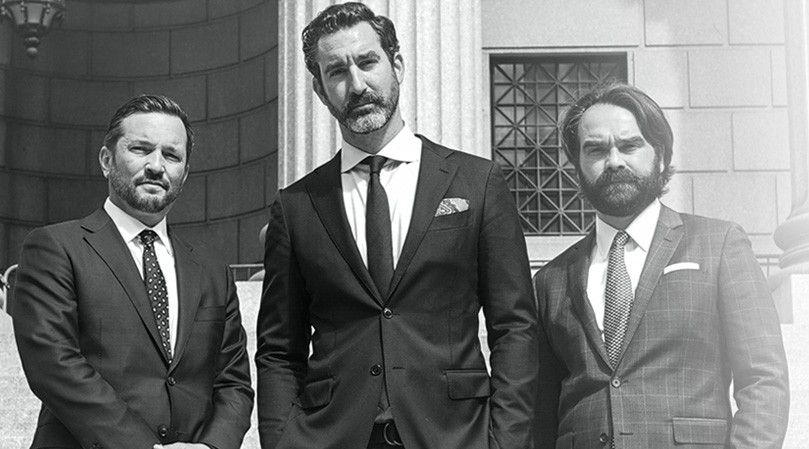
The firm’s partners, Adam B. Konta, Robert W. Georges, and John P. Buza, defend the full range of federal charges, including the drug and fraud offenses that conspiracy charges are most often built around. That experience shapes how every conspiracy case is investigated and negotiated. Prosecutors treat a firm ready to try the case and cross-examine their cooperators differently than one seeking a quick plea. Our NYC federal conspiracy lawyers use that credibility to fight for a dismissal, an acquittal, or a resolution that limits your exposure.
Talk to a NYC Federal Conspiracy Lawyer Today
Federal conspiracy cases are often won or lost during the investigation, before charges are even filed. Before you speak with agents or respond to a subpoena, talk to Konta, Georges & Buza, P.C. to get our defense team working on your case.
Need legal assistance?
Call us at (212) 710-5166 24/7 to arrange to speak with a lawyer about your case, or contact us through the website today.
Request Your Free Consultation
Fields Marked With An “ * ” Are Required
"*" indicates required fields
The Woolworth Building
233 Broadway
Suite 701
New York, NY 10279
get directions
Phone: 212-710-5166
Fax: 212-710-5162

Address:
The Woolworth Building
233 Broadway
Suite 701
New York, NY 10279
Address:
By Appointment Only
445 Hamilton Ave, 11th Fl
White Plains, NY 10601
Phone:
Fax:
follow us:


© 2026 Konta Georges & Buza P.C. All rights reserved.
Disclaimer | Site Map | Privacy PolicyAttorney Advertising | Prior results do not guarantee a similar outcome. The information on this website is for general information purposes only. Nothing on this site should be taken as legal advice for any individual case or situation. This information is not intended to create, and receipt or viewing does not constitute, an attorney-client relationship.