
Felony Forgery Attorney
Felony Forgery Attorney in NYC
Felony forgery in New York means falsely making, altering, or using a written instrument with intent to defraud, charged under Penal Law Article 170. Second degree forgery is a Class D felony and first degree is a Class C felony, carrying years in prison. The whole case usually turns on intent, which a NYC felony forgery attorney can challenge directly.
This page is part of our federal criminal defense practice and also covers New York state forgery charges. Konta, Georges & Buza, P.C. defends forgery and forged instrument cases across Manhattan, Brooklyn, Queens, the Bronx, and Staten Island. Because forgery requires proof that you intended to defraud someone, our NYC felony forgery attorneys focus first on whether that intent can actually be proven.
Need legal assistance?
Call us at (212) 710-5166 24/7 to arrange to speak with a lawyer about your case, or contact us through the website today.
What Is Forgery Under New York Law?
Forgery is falsely making, completing, or altering a written instrument with intent to defraud, deceive, or injure another person, under Penal Law Article 170. The key is not just that a document is false, but that you created or changed it intending to cheat someone. Without that intent, there is no forgery.
A written instrument can be a check, a contract, a deed, a will, an ID, a prescription, a government document, or many other papers and records. Signing someone else’s name, altering an amount, or creating a fake document can all qualify if done with fraudulent intent. But an honest mistake, an authorized signature, or a good faith belief that you had permission is not forgery. Our New York felony forgery attorneys build the defense around that intent element, because it is what the prosecution must prove and often cannot.
What Makes Forgery a Felony Instead of a Misdemeanor?
The type of instrument determines the degree. Third degree forgery, Penal Law 170.05, is a Class A misdemeanor. Second degree forgery, Penal Law 170.10, is a Class D felony and covers deeds, wills, contracts, public records, prescriptions, and vehicle titles. First degree forgery, Penal Law 170.15, is a Class C felony and covers money, stamps, and securities.
The law treats forgery more seriously as the instrument becomes more consequential. Forging a personal note might be a misdemeanor, while forging a deed or a prescription is a felony, and forging currency or securities is the most serious degree. Because the degree hinges on what kind of document is involved, the exact charge matters enormously. Our NYC felony forgery attorneys examine whether the instrument actually fits the felony degree charged, since that classification drives the entire penalty exposure.
What Is Criminal Possession of a Forged Instrument?
Criminal possession of a forged instrument, under Penal Law 170.20 through 170.30, means possessing or using a forged document that you know is forged, with intent to defraud. It mirrors the forgery degrees, so possessing a forged deed or prescription is a felony, and it is charged when someone uses a forged item rather than making it.
Many cases are charged as possession of a forged instrument rather than forgery itself, because the person was caught using or holding the document, not creating it. The prosecution still must prove two things: that you knew the instrument was forged, and that you intended to defraud. Simply possessing a document that turns out to be forged, without knowledge, is a defense. Our New York felony forgery attorneys attack both the knowledge and the intent elements in these possession cases.
What Must the Prosecution Prove in a Forgery Case?
The prosecution must prove that the instrument was false, that you made, altered, or possessed it, and, most importantly, that you acted with intent to defraud, deceive, or injure. Intent is the hardest element to prove and the center of most forgery defenses.
Falsity alone is not a crime. A document can be inaccurate, mistaken, or signed by someone with authority without any forgery occurring. The prosecution has to show a deliberate intent to cheat, which is often inferred from circumstances rather than proven directly. That inference can be attacked. Our NYC felony forgery attorneys press the gap between a false document and a proven intent to defraud, because reasonable doubt on intent means the charge fails.
What Are Common Forgery Scenarios in New York?
Common forgery cases involve forged or altered checks, signing another person’s name on a contract or check, altered prescriptions, fake identification, forged deeds or titles, and altered business or financial records. Many arise from family, business, or financial disputes where authority to sign is genuinely unclear.
A person who signs a relative’s check believing they had permission, an employee who signs on behalf of a boss, or a co-owner who alters a shared document can all end up accused of forgery even when no fraud was intended. Cases involving altered business records often overlap with our falsifying business records defense. The context frequently shows that the signing was authorized or innocent, and our New York felony forgery attorneys develop that context to defeat the intent element.
Is Forgery a State or Federal Crime?
Forgery can be charged under New York state law or federal law. Most cases are prosecuted under New York Penal Law Article 170, but forging federal documents, currency, securities, or identification can bring federal charges under statutes such as 18 U.S.C. 471 and 1028, prosecuted in the Southern and Eastern Districts of New York.
Whether a case is state or federal changes the procedure, the sentencing, and the defenses. Federal forgery and counterfeiting cases often involve government documents, immigration papers, or financial instruments and carry serious penalties. State forgery cases proceed through the New York courts under the NY criminal defense framework. Our firm handles both, so the defense does not change if the case moves from state to federal court.
What Are Common Defenses to a Forgery Charge?
The strongest forgery defenses attack intent and authorization. A lack of intent to defraud, actual authority or permission to sign, a good faith belief that you were authorized, a lack of knowledge that a document was forged, and mistaken identity can each defeat the charge.
Because intent to defraud is required, showing that you acted openly, believed you had permission, or made an honest mistake can be a complete defense. Authorization is common in family and business cases, where signing another person’s name was expected or agreed. In possession cases, not knowing a document was forged is a defense. Identity is also contested where the accusation rests on who signed or created something. Our NYC felony forgery attorneys match the defense to the facts rather than applying a template.
How Do Handwriting and Forensic Evidence Work in Forgery Cases?
Forgery cases often rely on handwriting comparison and document examination, but that evidence is far from conclusive. Handwriting analysis is subjective, and questioned document examiners can disagree. A strong defense frequently includes an independent expert to challenge the prosecution’s forensic conclusions.
Prosecutors may present a handwriting expert to claim you signed a document, but these opinions have real limitations, especially with brief signatures, copies, or degraded samples. Ink, paper, and printing analysis can also be contested. Our New York felony forgery attorneys retain independent document examiners when needed to test the prosecution’s science, because a shaky forensic opinion cannot carry a conviction on its own.
What Are the Penalties for Felony Forgery in New York?
Second degree forgery, a Class D felony, is punishable by up to seven years in state prison. First degree forgery, a Class C felony, carries up to fifteen years. A third degree misdemeanor forgery carries up to 364 days. A prior felony record raises the minimums, and restitution is often ordered.
The exposure grows with the degree and with any criminal history. Beyond prison, a forgery conviction brings a permanent record and collateral consequences for employment, professional licensing, and immigration, since forgery is a crime of dishonesty that employers and licensing boards take seriously. Our NYC felony forgery attorneys focus on the charge level and the intent evidence early, because reducing a felony to a misdemeanor, or defeating intent, changes everything about the outcome.
Can a Forgery Charge Be Reduced or Dismissed?
Yes. Forgery charges are frequently reduced or dismissed by attacking intent, disputing the handwriting or document evidence, showing authorization, and negotiating restitution. Because intent is so central, these cases offer real openings for the defense.
A weak intent case, a contested forensic opinion, or proof that the signing was authorized can move a felony down to a misdemeanor or lead to a dismissal. In many financial forgery cases, resolving the underlying loss through restitution supports a favorable outcome. Our New York felony forgery attorneys build that leverage through motions and negotiation, and a strong pretrial posture often persuades prosecutors to reduce or drop the charge.
Should I Talk to the Bank, My Employer, or the Police About the Document?
No. Do not explain the document to a bank investigator, an employer, or the police without a lawyer. In forgery cases, your explanation about why you signed or used a document is exactly the evidence of intent that the prosecution needs. Say nothing and get counsel first.
Banks and employers often conduct their own investigations and turn statements over to prosecutors, and an explanation meant to fix the problem can instead prove knowledge and intent. Even an apology can be treated as an admission. You have the right to remain silent and the right to counsel. Let our NYC felony forgery attorneys handle all communication with the bank, the employer, and law enforcement so you do not supply the missing element of the case.
What If I Am Not a U.S. Citizen and Was Charged With Forgery?
Forgery is dangerous for non-citizens because it is a crime involving moral turpitude and often relates to fraud, both of which carry serious immigration consequences. A conviction can affect a green card, a visa, or naturalization, so no plea should be entered without an immigration analysis.
Fraud and dishonesty offenses draw heavy immigration scrutiny, and forgery sits squarely in that category. A guilty plea meant to resolve the case quickly can trigger removal or bar relief. Under the Supreme Court’s Padilla decision, defense counsel must advise non-citizen clients of these risks. Our New York felony forgery attorneys structure dispositions to protect immigration status, often steering toward a non-fraud disposition or a dismissal.
Can I Be Charged With Forgery for Signing Someone Else’s Name?
You can be charged, but signing another person’s name is only forgery if you did it with intent to defraud and without authority. If you had permission, a power of attorney, or a good faith belief that you were authorized to sign, that is a defense, because the fraudulent intent is missing.
This scenario is one of the most common and most defensible in forgery law. Spouses, business partners, caregivers, and employees routinely sign for one another, and an arrangement that was understood between the parties is not a crime just because a dispute later arose. Prosecutors sometimes charge forgery when the real issue is a disagreement over authority. Our New York felony forgery attorneys gather the communications, prior practice, and any written authority that show the signing was permitted, which directly defeats the intent element the prosecution must prove.
What Is the Difference Between Forgery and Fraud?
Forgery focuses on a false document, while fraud focuses on a deceptive scheme to obtain money or property. They often overlap, and a single case can include both, but forgery specifically requires a falsely made or altered written instrument, whereas fraud can be committed through lies and misrepresentations without any forged document.
Because the two frequently appear together, prosecutors may charge forgery alongside larceny or fraud arising from the same events, increasing the exposure. Understanding which charge rests on which facts is essential, because a weakness in one may not affect the other. Our NYC felony forgery attorneys separate the forgery count from any related fraud charges and attack each on its own terms.
How Do Our NYC Felony Forgery Attorneys Handle These Cases?
Our approach is to attack intent, test the forensic evidence, show authorization where it exists, negotiate from strength, and try the case when the offer is not fair. Because forgery lives or dies on intent, that is where the defense concentrates.
Investigation means examining the document, the circumstances of the signing, and any communications showing permission or good faith. Where the case relies on handwriting or document analysis, the firm retains independent experts to challenge it. Motion practice means moving to suppress unlawfully obtained evidence and statements under CPL 710 and challenging a defective charge. Negotiation means using intent and forensic weaknesses to seek a reduction, restitution-based resolution, or dismissal. When the prosecution will not offer a fair outcome, our NYC felony forgery attorneys are trial lawyers who take the case to a jury.
Why Choose Konta, Georges & Buza for a Forgery Case?
Konta, Georges & Buza, P.C. is a New York criminal defense firm that handles both state and federal fraud and forgery cases in house, from a single forged check to a federal counterfeiting indictment. That range matters, because forgery often connects to larger fraud allegations.
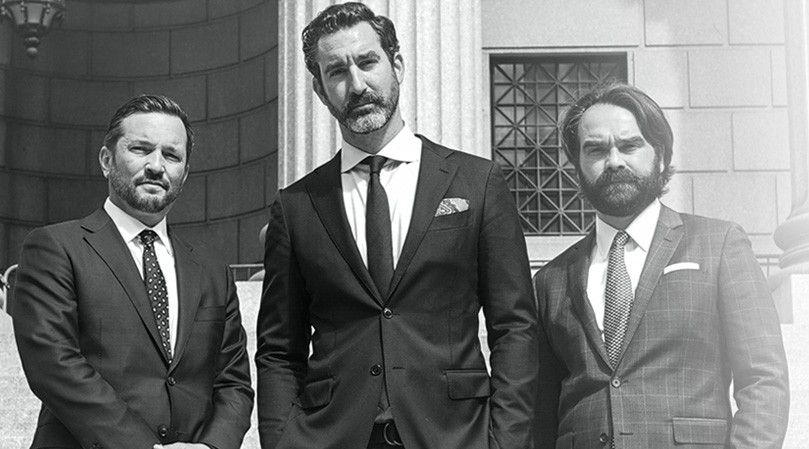
The firm’s partners, Adam B. Konta, Robert W. Georges, and John P. Buza, defend the full range of New York state and federal charges, including the fraud offenses that forgery frequently accompanies. That experience shapes how every forgery case is investigated and negotiated. Prosecutors treat a firm ready to challenge the intent evidence and try the case differently than one seeking a quick plea. Our NYC felony forgery attorneys use that leverage to fight for a reduction, a dismissal, or an acquittal.
Talk to a NYC Felony Forgery Attorney Today
A forgery case is most defensible before you explain anything to a bank, an employer, or the police. Before you talk to investigators, talk to Konta, Georges & Buza, P.C. to get our defense team examining the intent evidence and building your defense.
Need legal assistance?
Call us at (212) 710-5166 24/7 to arrange to speak with a lawyer about your case, or contact us through the website today.
Request Your Free Consultation
Fields Marked With An “ * ” Are Required
"*" indicates required fields
The Woolworth Building
233 Broadway
Suite 701
New York, NY 10279
get directions
Phone: 212-710-5166
Fax: 212-710-5162

Address:
The Woolworth Building
233 Broadway
Suite 701
New York, NY 10279
Address:
By Appointment Only
445 Hamilton Ave, 11th Fl
White Plains, NY 10601
Phone:
Fax:
follow us:


© 2026 Konta Georges & Buza P.C. All rights reserved.
Disclaimer | Site Map | Privacy PolicyAttorney Advertising | Prior results do not guarantee a similar outcome. The information on this website is for general information purposes only. Nothing on this site should be taken as legal advice for any individual case or situation. This information is not intended to create, and receipt or viewing does not constitute, an attorney-client relationship.