
Perjury Lawyer
Perjury Lawyer in NYC
Perjury is knowingly making a false statement under oath about a matter that is material to a proceeding. It is charged under New York Penal Law Article 210 and under federal law such as 18 U.S.C. 1621 and 1623, and it requires proof that you lied on purpose, not that you were mistaken. A NYC perjury lawyer attacks the knowledge and materiality the charge depends on.
This page is part of our federal criminal defense practice and also covers New York state perjury charges. Konta, Georges & Buza, P.C. defends perjury and false statement cases in the Southern and Eastern Districts of New York and in the state courts. Because perjury turns on whether a false statement was knowing and material, our NYC perjury lawyers focus first on whether the government can prove you deliberately lied about something that mattered.
Need legal assistance?
Call us at (212) 710-5166 24/7 to arrange to speak with a lawyer about your case, or contact us through the website today.
What Is Perjury Under New York and Federal Law?
Perjury is making a false statement under oath, knowing it is false, about a material matter. New York grades it under Penal Law Article 210, and federal law covers it under 18 U.S.C. 1621 and 1623. The statement must be sworn, deliberately false, and material to the proceeding for it to be perjury.
The requirement of an oath is central. Perjury applies to sworn testimony and sworn documents, not to ordinary lies. The false statement also has to be intentional, which separates perjury from an honest mistake or a faulty memory. Finally, it must be material, meaning it could affect the outcome of the proceeding. Our New York perjury lawyers examine each of these requirements, because the failure of any one of them defeats the charge.
What Does “Material” Mean, and Why Does It Matter?
Materiality means the false statement was capable of influencing the proceeding. A lie about something trivial or irrelevant, even under oath, is generally not perjury. The statement has to matter to the issue being decided, and if it did not, the charge should fail.
Materiality is a powerful defense because not every false or inaccurate sworn statement is a crime. If a statement had no bearing on the question before the court, grand jury, or agency, it usually cannot support a perjury conviction. Prosecutors sometimes charge perjury over statements that did not actually affect anything. Our NYC perjury lawyers challenge materiality directly, since a statement that did not matter to the proceeding is not perjury.
What Is the Difference Between Perjury and Being Mistaken?
Perjury requires a knowing, deliberate lie. If you testified to something you honestly believed was true, misremembered, misunderstood the question, or simply got a detail wrong, that is not perjury. The government must prove you knew the statement was false when you made it.
This distinction is often the whole case. Witnesses forget, confuse dates, misinterpret questions, and make honest errors under the stress of testifying, and none of that is a crime. Prosecutors must prove a willful lie, not a mistake, and that intent is frequently difficult to establish. Our New York perjury lawyers develop the innocent explanations, such as confusion, memory, or an ambiguous question, that negate the knowing falsehood the charge requires.
Where Does Perjury Happen?
Perjury can arise from testimony before a grand jury, at trial, or in a deposition, and from sworn written documents such as affidavits, applications, and declarations. Any place where you give sworn testimony or sign under oath can become the basis for a perjury charge.
Common settings include grand jury testimony, trial and hearing testimony, depositions in civil and criminal cases, and sworn documents filed with courts and agencies. New York separately punishes false written statements and false swearing in documents. Because the context and the exact wording of the oath and the questions matter, the setting shapes the defense. Our NYC perjury lawyers review the transcript or document closely to see what was actually asked and answered.
What About False Statements to Federal Agents?
Lying to federal agents can be a crime even when you are not under oath. Under 18 U.S.C. 1001, knowingly making a false statement to a federal agency or investigator is a felony punishable by up to five years, separate from perjury. This is why people are charged for lying to the FBI without ever testifying.
Section 1001 is one of the most common charges in federal investigations, because a false denial or a misleading answer to an agent can be prosecuted on its own. Unlike perjury, it does not require an oath, only a knowing and material false statement within federal jurisdiction. The safest course when approached by agents is to say nothing and get a lawyer, rather than risk a 1001 charge. Our federal perjury and false statement lawyers defend both perjury and Section 1001 cases.
Is Perjury a State or Federal Crime?
Perjury can be charged under New York state law or federal law depending on where the false statement was made. Statements in New York state courts and proceedings fall under Penal Law Article 210, while statements in federal court, grand juries, or agencies fall under federal statutes like 18 U.S.C. 1621 and 1623.
The forum determines the statute, the procedure, and the penalties. Federal false declaration cases under Section 1623, often used for grand jury and trial testimony, are somewhat easier for prosecutors than the general perjury statute. State perjury cases proceed under the NY criminal defense framework. Our firm handles both, so the defense is consistent wherever the case is brought.
What Must the Prosecution Prove in a Perjury Case?
The prosecution must prove that you made a statement under a lawful oath, that the statement was false, that you knew it was false, and that it was material to the proceeding. Each element is a separate hurdle, and reasonable doubt on any of them defeats the charge.
Proving a knowing falsehood is difficult, especially where memory, ambiguity, or interpretation is involved. The government must also establish a valid oath and materiality. Prosecutors sometimes assume these elements rather than prove them, particularly the willful intent to lie. Our NYC perjury lawyers hold the prosecution to each element, because perjury has more built-in defenses than most charges.
Can I Fix a False Statement by Correcting It?
Sometimes, yes. Both New York and federal law recognize a recantation defense. If you retract a false statement during the same proceeding, before it substantially affects the proceeding and before the falsity is exposed, that recantation can be a defense to perjury.
Recantation rewards correcting the record promptly rather than letting a lie stand. The timing is critical, because the retraction generally must come before the false statement has caused harm and before it becomes clear the lie will be discovered. Whether a correction qualifies depends on the specific facts and the applicable statute. Our New York perjury lawyers evaluate whether a recantation defense is available and how to preserve it.
What Are Common Defenses to a Perjury Charge?
Strong perjury defenses include literal truth, ambiguity in the question, lack of knowledge or intent, immateriality, faulty memory, the absence of a valid oath, and recantation. Because perjury requires a knowing, material, false, sworn statement, there are many ways the charge can fail.
Under the Supreme Court’s Bronston decision, a statement that is literally true is not perjury even if it was intended to mislead, which places the burden on the questioner to ask precise follow-up questions. An ambiguous or compound question can make an answer impossible to call false. Honest mistakes, memory failures, and immaterial statements each provide defenses. Our NYC perjury lawyers match the defense to exactly what was asked and answered, word for word.
What Are the Penalties for Perjury?
Penalties depend on the degree and the forum. In New York, first degree perjury is a Class D felony punishable by up to seven years, second degree is a Class E felony, and third degree is a Class A misdemeanor. Federal perjury under 18 U.S.C. 1621 and 1623 carries up to five years.
Beyond prison, a perjury conviction is a crime of dishonesty that carries lasting damage to credibility, employment, and professional licensing, and it can be used to impeach you in any future proceeding. A prior record raises the exposure. Because the stakes include both liberty and reputation, our New York perjury lawyers focus on defeating the charge or reducing it below a felony where possible.
Should I Talk to Investigators About My Testimony or Statement?
No. Do not explain or try to clarify a prior statement to investigators without a lawyer. In a perjury or false statement case, your further explanations can be used to prove you knew the original statement was false, or can create a new false statement charge under 18 U.S.C. 1001.
People often want to clean up an earlier statement, but doing so without counsel can deepen the problem or add charges. Anything you say can be used to establish the knowledge element the government must prove. You have the right to remain silent and the right to counsel. Let our NYC perjury lawyers handle all communication with investigators and prosecutors so you do not make the case worse.
What If I Received a Subpoena or Am a Target of a Perjury Investigation?
Do not testify again, speak to agents, or alter any records without counsel. A subpoena, a target letter, or contact from investigators means you need a lawyer immediately, because how you handle the next statement can determine whether charges are filed.
Perjury and false statement investigations often build on a person’s own words, so every additional statement carries risk. A lawyer can prepare you for any testimony, respond to a subpoena properly, and sometimes persuade prosecutors not to charge. Our New York perjury lawyers engage early to protect you before the situation escalates into an indictment.
What If I Am Not a U.S. Citizen and Was Charged With Perjury?
Perjury is a crime involving moral turpitude, which can carry serious immigration consequences for non-citizens, including problems with a green card, a visa, or naturalization. No plea should be entered without a full immigration analysis.
Because perjury is a crime of dishonesty, immigration authorities treat it seriously, and a conviction can affect status and relief even when the sentence is modest. Under the Supreme Court’s Padilla decision, defense counsel must advise non-citizen clients of these consequences. Our NYC perjury lawyers factor immigration exposure into every decision about trial or a plea.
How Does the Government Prove Perjury?
Perjury has special proof rules that make it harder to prove than an ordinary crime. Under the traditional two witness rule that applies to 18 U.S.C. 1621 and to New York perjury, the falsity of a statement generally cannot be established by a single witness alone. It requires two witnesses or one witness plus independent corroborating evidence.
This rule exists because a perjury case cannot come down to one person’s word against another about what the truth was. New York codifies a similar corroboration requirement, so a conviction cannot rest solely on the contradictory testimony of a single witness. The federal false declaration statute, 18 U.S.C. 1623, is an exception that removes the two witness rule, which is one reason prosecutors favor it for grand jury and trial testimony. Our NYC perjury lawyers use these proof requirements, along with the difficulty of proving a knowing lie, to attack the sufficiency of the government’s case.
How Do Our NYC Perjury Lawyers Handle These Cases?
Our approach is to analyze the exact words, attack knowledge and materiality, raise the literal truth and ambiguity defenses, preserve any recantation, and try the case when the offer is not fair. Perjury is a charge that rewards precise, careful defense work.
The first step is a word-by-word review of the transcript or document to see what was actually asked and answered. Investigation means testing whether the statement was truly false, knowing, and material, and whether the oath was valid. Motion practice means challenging a legally insufficient charge and, where relevant, an ambiguous or compound question. Negotiation means using these weaknesses to seek a reduction or dismissal. When the prosecution will not offer a fair outcome, our NYC perjury lawyers are trial lawyers who take the case to a jury. These cases often overlap with the firm’s falsifying business records defense.
Why Choose Konta, Georges & Buza for a Perjury Case?
Konta, Georges & Buza, P.C. is a New York criminal defense firm that handles both state and federal perjury and false statement cases in house, from a grand jury investigation to a federal indictment. These cases demand a lawyer who works precisely with transcripts and the elements.
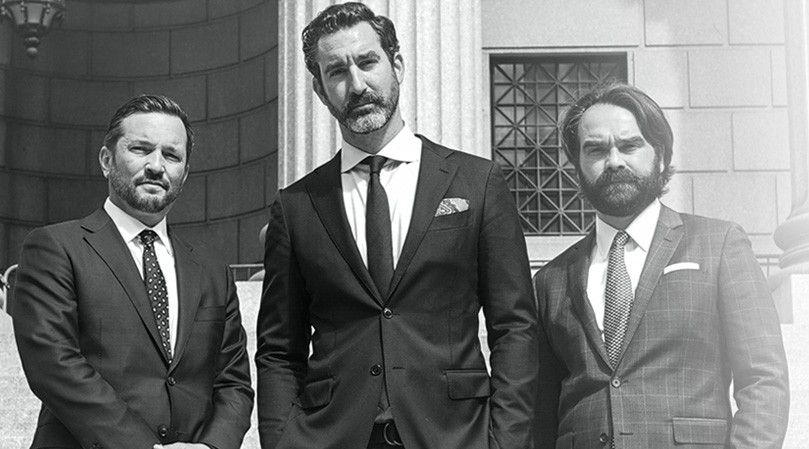
The firm’s partners, Adam B. Konta, Robert W. Georges, and John P. Buza, defend the full range of New York state and federal charges, including the fraud and false statement offenses perjury is often charged alongside. That experience shapes how every perjury case is analyzed and negotiated. Prosecutors treat a firm ready to hold them to each element and try the case differently than one seeking a quick plea. Our NYC perjury lawyers use that leverage to fight for a dismissal, a reduction, or an acquittal.
Talk to a NYC Perjury Lawyer Today
A perjury case is most defensible before you give another statement or explanation. Before you talk to investigators or testify again, talk to Konta, Georges & Buza, P.C. to get our defense team analyzing exactly what was said and building your defense.
Need legal assistance?
Call us at (212) 710-5166 24/7 to arrange to speak with a lawyer about your case, or contact us through the website today.
Request Your Free Consultation
Fields Marked With An “ * ” Are Required
"*" indicates required fields
The Woolworth Building
233 Broadway
Suite 701
New York, NY 10279
get directions
Phone: 212-710-5166
Fax: 212-710-5162

Address:
The Woolworth Building
233 Broadway
Suite 701
New York, NY 10279
Address:
By Appointment Only
445 Hamilton Ave, 11th Fl
White Plains, NY 10601
Phone:
Fax:
follow us:


© 2026 Konta Georges & Buza P.C. All rights reserved.
Disclaimer | Site Map | Privacy PolicyAttorney Advertising | Prior results do not guarantee a similar outcome. The information on this website is for general information purposes only. Nothing on this site should be taken as legal advice for any individual case or situation. This information is not intended to create, and receipt or viewing does not constitute, an attorney-client relationship.