
NYC Violent Crime Defense Lawyer
NYC Violent Crime Defense Lawyer
Violent crime charges in New York carry the harshest consequences in the criminal law, including determinate state prison sentences, mandatory minimums, and a permanent violent felony record. These cases cover assault, robbery, burglary, weapons, kidnapping, and homicide. A NYC violent crime defense lawyer can challenge the evidence, raise justification defenses, and fight to reduce or dismiss the charge.
This page is the violent crime section of our NY criminal defense practice, and it links to the specific charge pages below. Konta, Georges & Buza, P.C. defends people accused of violent felonies across Manhattan, Brooklyn, Queens, the Bronx, and Staten Island. Because these are among the most serious cases in the system, our NYC violent crime defense attorneys prepare every one for trial from the first court appearance.
Need legal assistance?
Call us at (212) 710-5166 24/7 to arrange to speak with a lawyer about your case, or contact us through the website today.
What Is Considered a Violent Crime in New York?
New York defines a category of violent felony offenses under Penal Law 70.02, which triggers tougher, determinate sentencing. These include assault, robbery, most burglary degrees, many weapons offenses, kidnapping, and homicide. What sets them apart is the use or threat of force, or the presence of a weapon, which the law treats as far more serious.
The violent felony label matters because it changes the sentencing rules. Instead of the flexible, indeterminate sentences that apply to many nonviolent felonies, violent felony offenses carry fixed determinate prison terms with mandatory minimums and post-release supervision. Not every charge that sounds violent is legally a violent felony, and the exact statute and degree control. Our New York violent crime defense attorneys examine whether a charge truly fits the violent felony statute, because that classification drives the entire case.
What Violent Crime Charges Do Our NYC Attorneys Defend?
Our NYC violent crime defense attorneys handle the full range of violent felony charges, from assault and robbery to weapons offenses, kidnapping, and homicide. Each charge has its own statute, penalties, and defenses, and each has a dedicated page with the details. A single incident often produces several stacked charges, so the defense has to address the whole set, not just the top count.
Assault cases, from misdemeanor third degree to felony first degree, are handled by our assault defense lawyers. Forcible theft charges are defended by our robbery defense lawyers, and unlawful entry cases by our burglary defense lawyers. Gun and weapon possession cases are handled by our weapons charges lawyers, and restraint and abduction cases by our kidnapping lawyers. The most serious cases are handled by our homicide defense lawyers. Charges involving alleged sexual violence are defended by our sex crime attorneys.
What Are the Penalties for a Violent Crime Conviction in NYC?
Violent felony convictions carry determinate prison sentences set by the offense class under Penal Law 70.02, followed by post-release supervision. A Class B violent felony can reach 25 years, a Class C up to 15 years, a Class D up to 7 years, and a Class E up to 4 years, with mandatory minimums for many offenses.
Unlike nonviolent felonies, violent felony offenses generally require a fixed term of incarceration rather than probation, and a prior felony record raises the minimums sharply. As an example, a first-time Class B violent felony carries a mandatory minimum of five years, while the most serious homicide charges carry life imprisonment. Sentences also frequently come with fines, restitution to any complainant, and a final order of protection barring contact. Beyond prison, a violent felony conviction brings a permanent record, loss of firearm rights, and immigration consequences. Because the exposure is so severe, our NYC violent crime defense attorneys focus on the classification and the evidence early, since reducing a violent felony to a lesser charge can change the sentence dramatically.
How Does Self-Defense Work in New York?
New York allows the use of force to defend yourself or others under the justification statute, Penal Law Article 35. You may use physical force when you reasonably believe it is necessary to stop an imminent attack. Deadly physical force is more restricted and generally requires that you could not safely retreat, with an exception in your own home.
Justification is a complete defense, meaning a valid self-defense claim results in acquittal, not just a reduced charge. Once raised, the prosecution must disprove it beyond a reasonable doubt. New York imposes a duty to retreat before using deadly force if you can do so with complete safety, but that duty does not apply inside your own home under the castle doctrine. These cases turn on what was reasonable in the moment. Our New York violent crime defense attorneys develop the facts, witnesses, and injuries that support a justification defense.
Can a Violent Crime Charge Be Reduced or Dismissed?
Yes. Even serious violent charges are frequently reduced or dismissed through weaknesses in identification, gaps in the evidence, justification defenses, and suppression motions. Many cases rest on a single witness or contested forensic proof, which creates real openings for the defense.
Prosecutors often charge at the highest degree available and negotiate down as the case develops. A shaky identification, a lack of physical evidence, a credible self-defense claim, or an unlawful search can each move a case toward a lesser charge or a dismissal. If evidence or statements were obtained illegally, our NYC violent crime defense attorneys move to suppress them under CPL 710, and a defective indictment can be challenged before trial. Building that pressure early is what produces better outcomes.
What Are Common Defenses to Violent Crime Charges?
The strongest violent crime defenses include self-defense and justification, mistaken identification, lack of intent, insufficient evidence, and challenges to unlawfully obtained evidence. The right defense depends on the specific charge and the facts behind it.
Mistaken identity is common in street and nighttime cases, and suggestive lineups and showups can be challenged. Many violent crimes require proof of a specific intent that may be missing in a chaotic or mutual altercation. Forensic evidence such as DNA and ballistics is often less conclusive than prosecutors suggest, and our New York violent crime defense attorneys retain independent experts to test it. Each defense is matched to the charge rather than applied from a template, which is why the analysis starts with the exact statute and evidence.
What Should I Do After a Violent Crime Arrest in NYC?
Stay silent and ask for a lawyer immediately. Do not explain, apologize, or give your side to police, because in a violent crime case your own words about who started it or what happened often become the key evidence. Preserve anything that supports your account, including messages, photos, and witness names.
The pressure to talk after a violent arrest is intense, and detectives are skilled at drawing out statements that later look like admissions. Even an explanation meant to show you acted in self-defense can be twisted if given without counsel. Exercise your right to remain silent, request an attorney, and stop answering questions. Our NYC violent crime defense attorneys handle communication with investigators and prosecutors, and they move quickly to secure surveillance video and other evidence before it disappears.
Will a Violent Crime Charge Affect My Record, Immigration, or Gun Rights?
Yes. A violent felony conviction creates a permanent record, strips firearm rights, and carries serious immigration consequences, since many violent offenses are deportable or classified as aggravated felonies. These collateral effects can be as damaging as the sentence itself.
A violent felony record follows you through employment, housing, and licensing for life, and it raises the penalties on any future charge. For non-citizens, a conviction for a violent offense frequently triggers removal, so no plea should be entered without an immigration analysis, as the Supreme Court’s Padilla decision requires. Firearm eligibility is lost on a felony conviction. Our New York violent crime defense attorneys weigh every one of these consequences when advising on trial or a plea.
How Do Prior Convictions Affect a Violent Crime Case in New York?
A prior record can sharply increase the mandatory sentence on a new violent felony. Under New York’s second violent felony offender and persistent violent felony offender laws, Penal Law 70.04 and 70.08, a defendant with qualifying prior violent felonies faces significantly higher minimum prison terms, sometimes life.
These predicate statutes remove much of a judge’s discretion, requiring an enhanced determinate sentence when the prosecution files a prior violent felony statement. Whether an old conviction actually qualifies as a predicate is often contestable, based on its age, its classification, and how it was obtained. Our NYC violent crime defense attorneys challenge predicate filings closely, because defeating predicate status can be the difference between a manageable sentence and a decade or more of additional mandatory time.
How Long Do Prosecutors Have to File Violent Crime Charges?
It depends on the offense. There is no statute of limitations for a Class A felony such as murder, so those charges can be brought at any time. Most other felonies, including many violent felonies, carry a five year limitation period under Criminal Procedure Law 30.10, subject to tolling.
The absence of a time limit on the most serious charges is why murder cases can be prosecuted decades later. For other violent felonies, the five year clock can be paused when a defendant is out of state or otherwise unavailable, which extends the effective deadline. Old cases are not automatically strong, because the passage of time erodes evidence and memory. Our New York violent crime defense attorneys use those weaknesses to attack the reliability of a delayed prosecution.
How Do Our NYC Violent Crime Defense Attorneys Handle These Cases?
Our approach is to investigate independently, challenge the identification and forensics, litigate motions, raise every available defense, and try the case when the offer is not fair. Because violent felonies carry mandatory prison exposure, the defense has to be built for trial from day one.
Independent investigation means finding witnesses and video the police overlooked and testing the prosecution’s timeline. Motion practice means moving to suppress unlawful searches, statements, and identifications under CPL 710 and challenging a defective indictment. Where forensics are contested, the firm retains its own DNA, ballistics, and medical experts. Negotiation means using those weaknesses to seek a reduction below the violent felony level. When the prosecution will not offer a fair resolution, our NYC violent crime defense attorneys are trial lawyers who take the case to a jury.
Why Choose Konta, Georges & Buza for a Violent Crime Case?
Konta, Georges & Buza, P.C. is a New York criminal defense firm that handles its cases in house, from arraignment through trial and appeal. Violent felony cases demand real trial experience, because the sentencing exposure leaves no room for a lawyer who is not prepared to try the case.
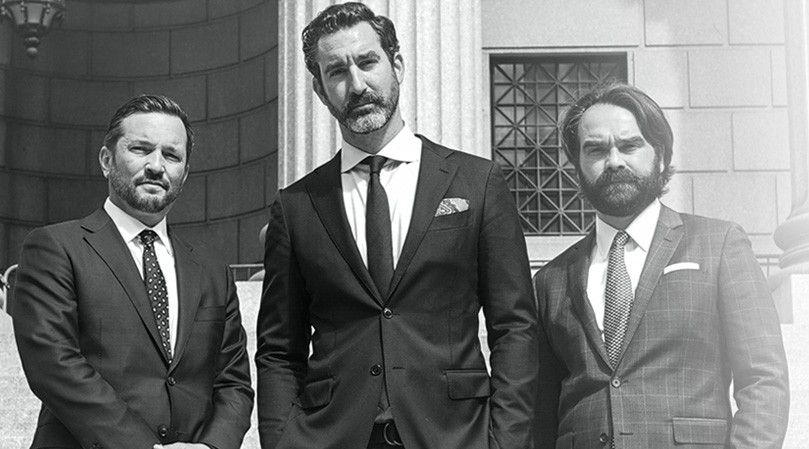
The firm’s partners, Adam B. Konta, Robert W. Georges, and John P. Buza, defend the full range of New York state and federal charges, including the most serious violent felonies. That courtroom experience shapes how every case is investigated and negotiated. Prosecutors treat a firm genuinely ready for trial differently than one seeking a quick plea, and our NYC violent crime defense attorneys use that credibility to fight for an acquittal, a dismissal, or a resolution that avoids a violent felony conviction.
Talk to a NYC Violent Crime Defense Lawyer Today
A violent crime charge is most defensible when the work starts early, before evidence is lost and before you say anything to investigators. Talk to Konta, Georges & Buza, P.C. to get our defense team building your case now.
Need legal assistance?
Call us at (212) 710-5166 24/7 to arrange to speak with a lawyer about your case, or contact us through the website today.
Request Your Free Consultation
Fields Marked With An “ * ” Are Required
"*" indicates required fields
The Woolworth Building
233 Broadway
Suite 701
New York, NY 10279
get directions
Phone: 212-710-5166
Fax: 212-710-5162

Address:
The Woolworth Building
233 Broadway
Suite 701
New York, NY 10279
Address:
By Appointment Only
445 Hamilton Ave, 11th Fl
White Plains, NY 10601
Phone:
Fax:
follow us:


© 2026 Konta Georges & Buza P.C. All rights reserved.
Disclaimer | Site Map | Privacy PolicyAttorney Advertising | Prior results do not guarantee a similar outcome. The information on this website is for general information purposes only. Nothing on this site should be taken as legal advice for any individual case or situation. This information is not intended to create, and receipt or viewing does not constitute, an attorney-client relationship.