
Can Jail Phone Calls Be Used as Evidence in New York?
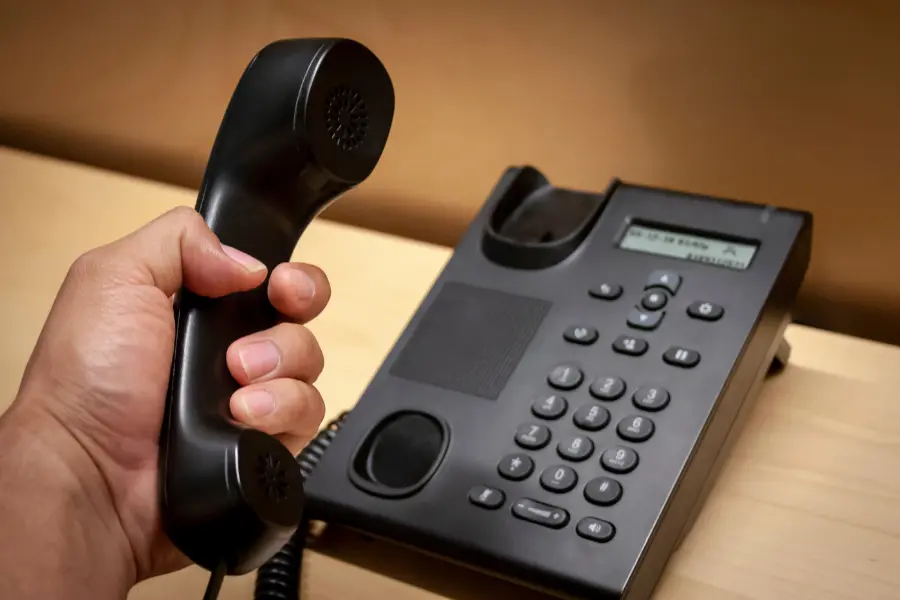
Can Jail Phone Calls Be Used as Evidence in New York?
Yes. Jail phone calls can be used as evidence in a New York criminal case. Almost every call from a New York jail is recorded, and prosecutors regularly introduce those recordings to show admissions, contradict a defense, or prove a defendant’s state of mind. Only properly arranged calls with an attorney are generally protected from being used this way.
Recorded jail calls are one of the most underestimated sources of evidence in a New York City case, and they usually come from people who meant no harm. The criminal defense attorneys at Konta, Georges & Buza P.C. see prosecutors build arguments out of a single sentence spoken on a monitored line. Before worrying about how calls are used, it helps to understand the basics of jail phone calls and visits in New York, because how the system works is exactly what makes those calls usable in court.
If a loved one is in custody in New York City, the smartest move is to talk to a lawyer before the next call. Contact Konta, Georges & Buza P.C. to speak with a NYC criminal defense attorney about the case.
Are Jail Phone Calls Recorded in New York?
Yes. Nearly every call from a New York jail or detention facility is recorded and monitored, and both parties are warned at the start of the call. The only calls generally shielded are properly arranged legal calls with an attorney. Assume every other jail call is recorded and could be reviewed by investigators or prosecutors.
An automated message plays at the beginning of the call telling both people that it will be recorded and may be monitored. The New York City Department of Correction states that a non-private call will be recorded and may be monitored for law enforcement purposes, and that using a facility phone is treated as consent to that monitoring. The same is true in federal custody, where the Federal Bureau of Prisons records inmate calls and monitors them, with an exception for prearranged attorney calls.
Those recordings are stored, searchable, and easy for a prosecutor’s office to request. Our NYC criminal defense attorneys routinely receive hours of jail call audio in discovery, sometimes covering weeks of conversation the caller assumed no one would ever hear.
How Do Prosecutors Use Jail Calls as Evidence?
Prosecutors use recorded jail calls to prove admissions, to contradict a defendant’s account, to show relationships between people, and to argue about intent and state of mind. They also mine calls for small details, like a name, a date, or an emotional reaction, that can be woven into a larger narrative at trial.
A jail call rarely needs to contain a confession to be damaging. These are the ways our New York criminal defense lawyers most often see recordings used against a client:
- Admissions: Any statement that sounds like acknowledging conduct can be replayed as an admission, even if it was said in frustration or grief.
- Impeachment: A call that conflicts with the defense or with a later statement can be used to argue the defendant is not credible.
- State of mind and intent: Comments about anger, motive, or knowledge can be offered to prove intent.
- Relationships and roles: Calls can be used to connect co-defendants or to show who knew whom, which matters in conspiracy and gang cases.
- Consciousness of guilt: Coaching a story, discussing witnesses, or coordinating accounts can be argued as evidence of guilt.
The stakes are real. A statement pulled from a recorded call can influence a plea, a verdict, and ultimately a sentence, which is why our attorneys treat every jail call as potential trial evidence from the day of the arrest.
Why Are Jail Phone Calls Admissible in Court?
Jail calls are generally admissible because both people are warned that the call is recorded, so the recording is treated as consented to and not an illegal wiretap. Courts have also held that people in custody have no reasonable expectation of privacy in non-legal jail calls. Together, those rules make most recorded jail calls usable as evidence.
This surprises families who assume a private-sounding phone call cannot be used. The warning at the start of the call is the legal mechanism. Because the person in custody and the person on the outside both hear it and keep talking, the law treats the conversation as one they agreed to have recorded.
The confidential exception is narrow and belongs to the attorney-client relationship, not to the general phone system. That is why our New York City criminal defense attorneys move quickly to set up a protected line and to warn clients and families away from discussing the case on a monitored one.
Can a Jail Call Be Kept Out of Evidence?
Sometimes, but the grounds are limited. A jail call may be challenged when it was not properly disclosed in discovery, when it cannot be authenticated, when it is unfairly misleading without context, or when it captures a protected attorney call. Blanket suppression of a lawfully recorded, properly warned jail call is difficult.
The more common battle is over meaning rather than admissibility. A prosecutor may want to play a short clip, while the defense argues the full call shows something very different. How a recording is interpreted, edited, and presented is often fought over line by line, a fight that plays out in the same way as other evidence disputes covered in our overview of a New York suppression hearing.
Our NYC criminal defense attorneys examine how each recording was obtained, whether it was timely turned over, whether it is complete, and whether the prosecution’s interpretation actually holds up. We cannot promise a call will be excluded, but its meaning and reliability can be tested at every stage.
Are Calls With Your Lawyer Protected From Being Used as Evidence?
Properly arranged legal calls between a person in custody and their attorney are meant to be confidential and are generally not monitored or usable as evidence. That protection depends on the call being set up correctly through the facility and the attorney. A casual call to a lawyer’s line without those safeguards may not carry the same protection.
The protected channel is the attorney-client relationship, established the right way, not simply any call that happens to reach a lawyer. This is one more reason the details of a case belong with counsel and never on a family jail call.
Once retained, the criminal defense team at Konta, Georges & Buza P.C. arranges confidential communication and advises the client and family on exactly how to talk while the case is pending, which keeps sensitive conversation out of the recorded system entirely.
What Kinds of Statements Get People in Trouble on Jail Calls?
The statements that cause the most harm on jail calls are anything about the facts of the case, the evidence, witnesses, other people involved, or what someone should tell the police. Even sarcasm, venting, and figures of speech can read as admissions on a transcript. When in doubt, say nothing about the case.
People rarely intend to hurt their own case. They explain, they vent, they try to make sense of what happened, and a prosecutor later turns those moments into exhibits. The same pattern shows up with digital statements, which our attorneys warn about in a related post on why you should be careful what you post on social media if accused of a crime.
The safest approach on a jail call is narrow and simple. Talk about health, family, and logistics. Leave the case for the lawyer. A recorded line is never the place to work through the charges.
How Do Our NYC Criminal Defense Attorneys Handle Jail Call Evidence?
Our NYC criminal defense attorneys treat jail calls as core evidence from the start. The team advises the client and family on communication immediately, obtains and reviews every recording in discovery, challenges how calls are interpreted, and prepares for how a prosecutor may try to use each one at every stage of the case.
Early intervention comes first. As soon as our criminal defense team is retained, the client and family receive clear guidance on what can and cannot be said on the phone, which stops new evidence from being created while the case is still forming.
From there, the work is methodical. Our New York City criminal defense attorneys pull the full set of recorded calls, listen for what the prosecution will highlight, and put each clip in context. The team tests how a statement was actually meant, whether it says what the prosecution claims, and whether the recording was properly obtained and disclosed. Those questions carry into motions, negotiation, and, when needed, trial.
Why Choose Konta, Georges & Buza P.C. for a New York Criminal Case?
Konta, Georges & Buza P.C. is a New York City criminal defense firm that handles state and federal cases from arrest through trial and appeal. The firm’s attorneys know how prosecutors turn recorded jail calls and everyday statements into evidence, and they move early to protect clients before a small comment becomes a large problem.
Criminal cases in New York are won and lost on details, and few details catch people off guard like a recorded phone call. The attorneys at Konta, Georges & Buza P.C. bring that awareness to every case, guiding clients and their families through the moments that are easy to get wrong. The goal from day one is to keep the defense strong and the client protected at every stage.
Contact a NYC Criminal Defense Attorney
If someone you love is in custody in New York City, act before the next jail call. Understanding how recorded calls become evidence now can keep a phone conversation from being used against them later.
Contact Konta, Georges & Buza P.C. to speak with a New York City criminal defense attorney about the case, how to communicate safely, and how recorded jail calls may factor into the defense.
Attorney Advertising. This blog is general information only and is not legal advice. Reading it does not create an attorney-client relationship. Prior results do not guarantee a similar outcome. Every case is different and depends on its own facts.
Sources
Request Your Free Consultation
Fields Marked With An “ * ” Are Required
"*" indicates required fields
The Woolworth Building
233 Broadway
Suite 701
New York, NY 10279
get directions
Phone: 212-710-5166
Fax: 212-710-5162

Address:
The Woolworth Building
233 Broadway
Suite 701
New York, NY 10279
Address:
By Appointment Only
445 Hamilton Ave, 11th Fl
White Plains, NY 10601
Phone:
Fax:
follow us:


© 2026 Konta Georges & Buza P.C. All rights reserved.
Disclaimer | Site Map | Privacy PolicyAttorney Advertising | Prior results do not guarantee a similar outcome. The information on this website is for general information purposes only. Nothing on this site should be taken as legal advice for any individual case or situation. This information is not intended to create, and receipt or viewing does not constitute, an attorney-client relationship.